Nanosystems Biology
Category
Published on
Abstract
 As we enter the 21st century, we stand at a major inflection point for biology and medicine-the way we view and practice these disciplines is changing profoundly. These changes are being driven by systems biology, a new approach to biology, and which will increasingly transform medicine from disease-driven and reactive to health-driven and predictive and preventative. Systems biology and predictive and preventative medicine are both are data driven and, accordingly, both require new tools for making large numbers of measurements. Microfluidics, nanotechnologies and molecular imaging will revolutionize our ability to generate comprehensive data sets that span from individual cells to patients. In this talk I will describe a systems biology approach toward disease, using cancer as the model. I will then describe our progress toward developing 'informative' diagnostic tools based upon the multiparameter analysis of blood cells and serum, with the goals of achieving early stage detection of various cancers.
Bio
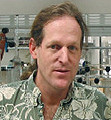 James R. Heath is the Elizabeth W. Gilloon Professor and Professor of Chemistry at Caltech, and Professor of Molecular & Medical Pharmacology at UCLA. Heath received a B.Sc. degree in 1984 (Baylor) and his Ph.D. in Chemistry (Rice) in 1988 where he was the principal student involved in the Nobel Prize-winning discovery of C60 and the fullerenes. Heath was a Miller Fellow at UC Berkeley from 1988-91, and on the Technical Staff at IBM Watson Labs from 1991-94. In 1994 he joined the faculty at UCLA. He founded the California NanoSystems Institute in 2000 and served as its Director until moving to Caltech. Heath has investigated quantum phase transitions and developed architectures, devices, and circuits for molecular electronics. His group has recently been applying their nano/molecular electronics work toward addressing problems in cancer and infectious diseases. His many awards include, a Public Service Commendation from Governor Grey Davis, the Sackler Prize, the Feynman Prize, the Jules Springer Prize, and the Arthur K. Doolittle Award.
Sponsored by
The Bindley Bioscience Center
The NASA Institute for Nanoelectronics and Computing
The Network for Computational Nanotechnology
Cite this work
Researchers should cite this work as follows:
Time
Location
RAWLS, Room 1086, Purdue University, West Lafayette, IN